Origin
Tanzanite — a variety of Zoisite — is one of the youngest and most captivating Gems in the world of jewelry.
Discovered only in 1967 at the foot of Mount Kilimanjaro, it was named by Tiffany & Co. in tribute to its single place of origin: Tanzania.
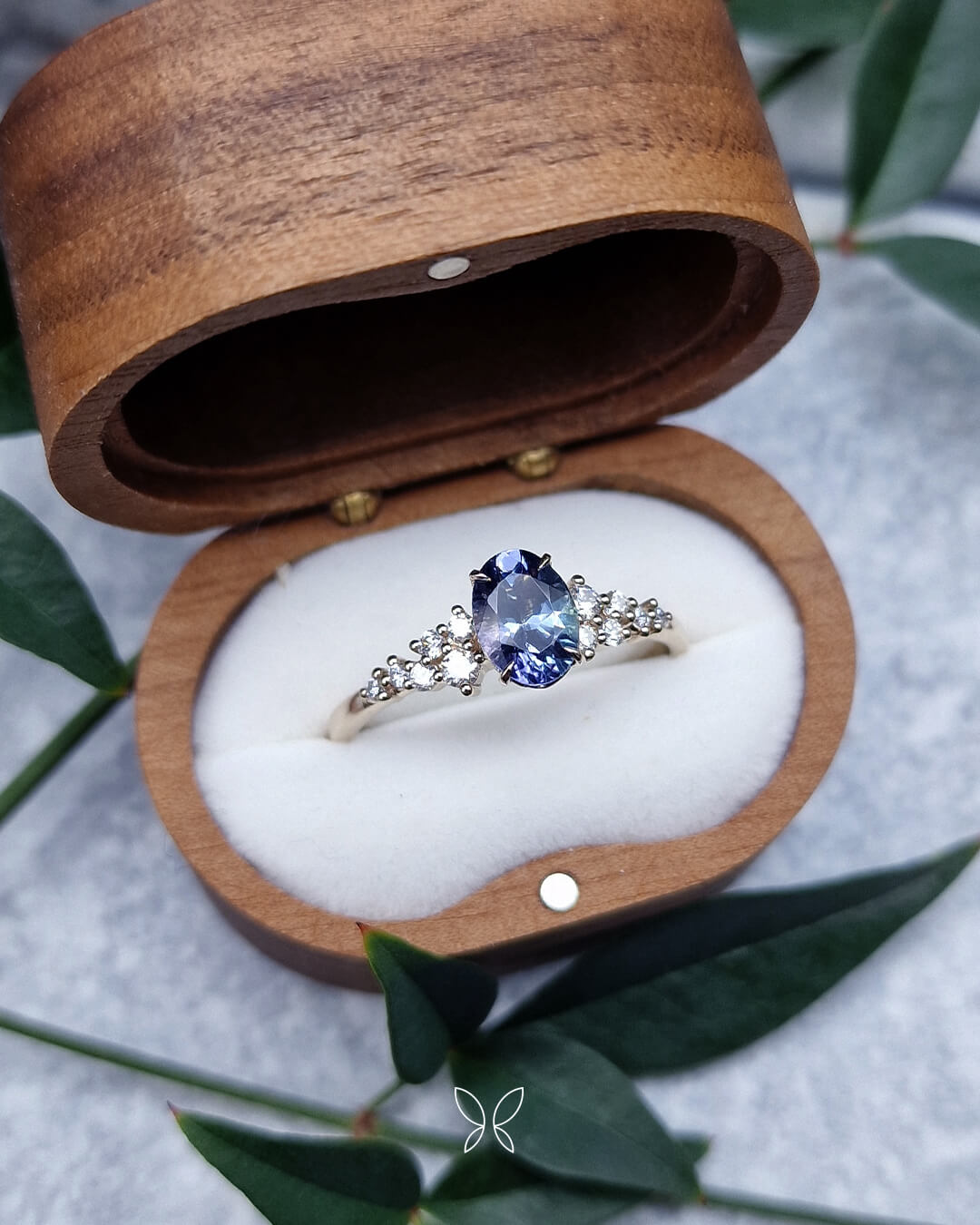
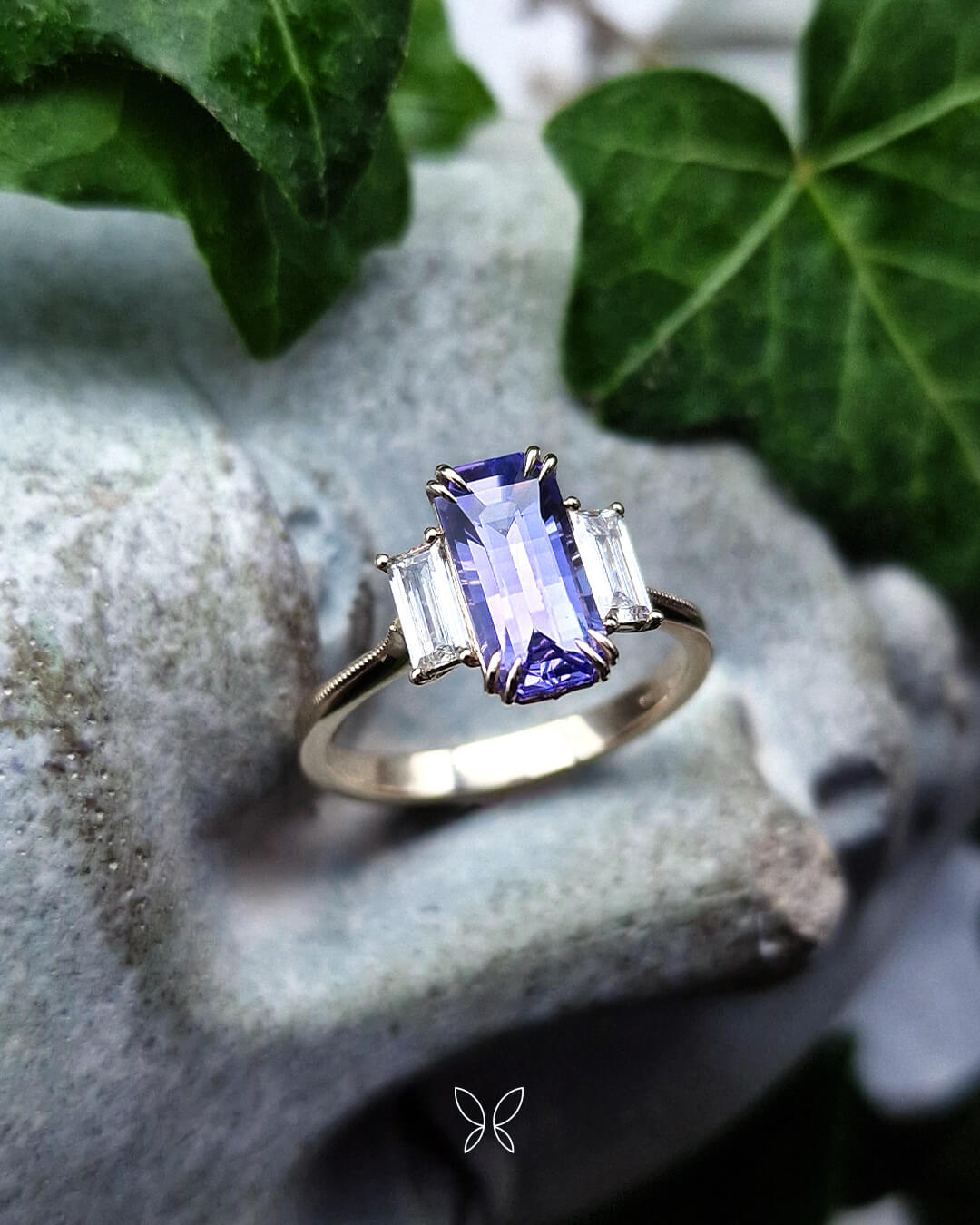
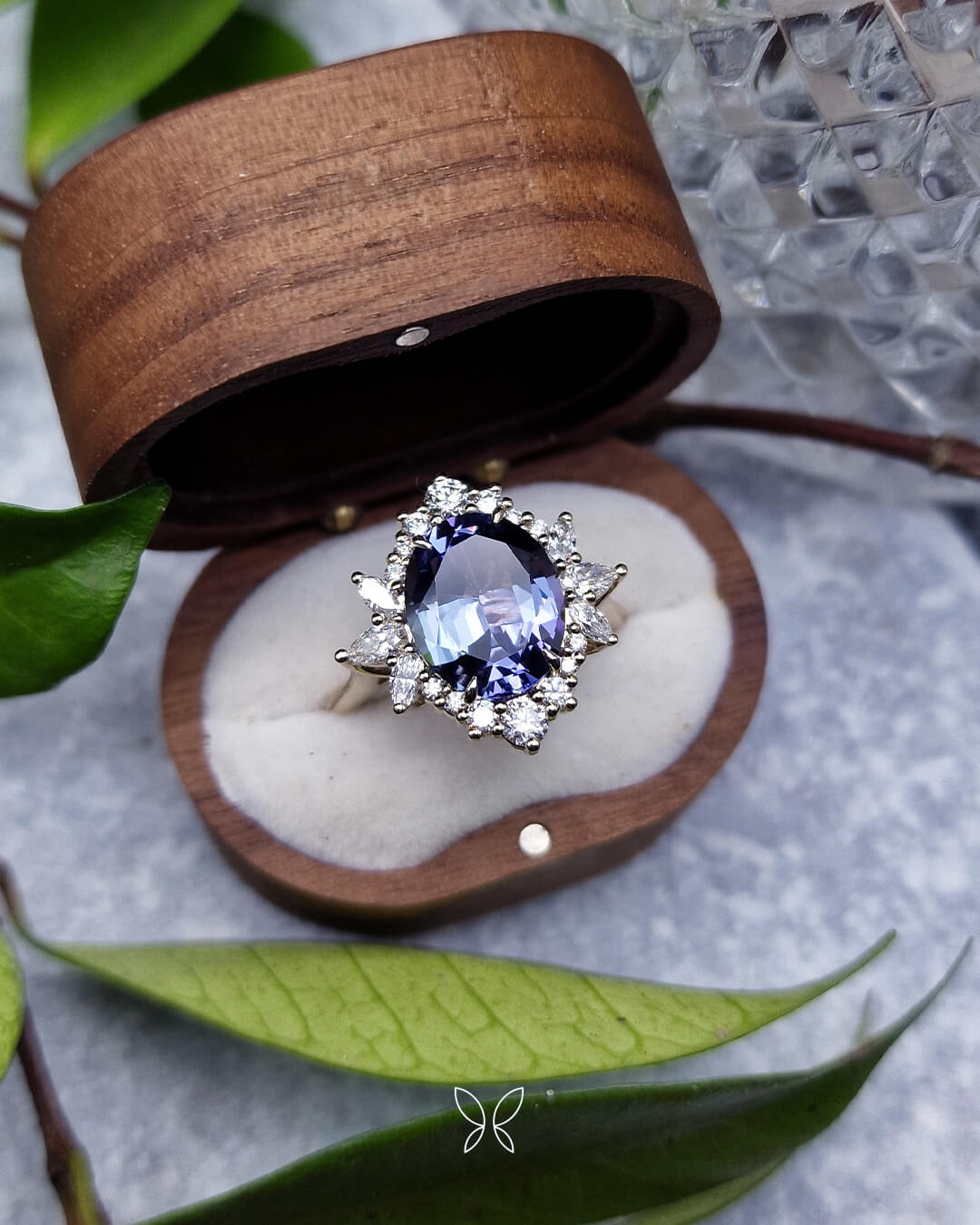
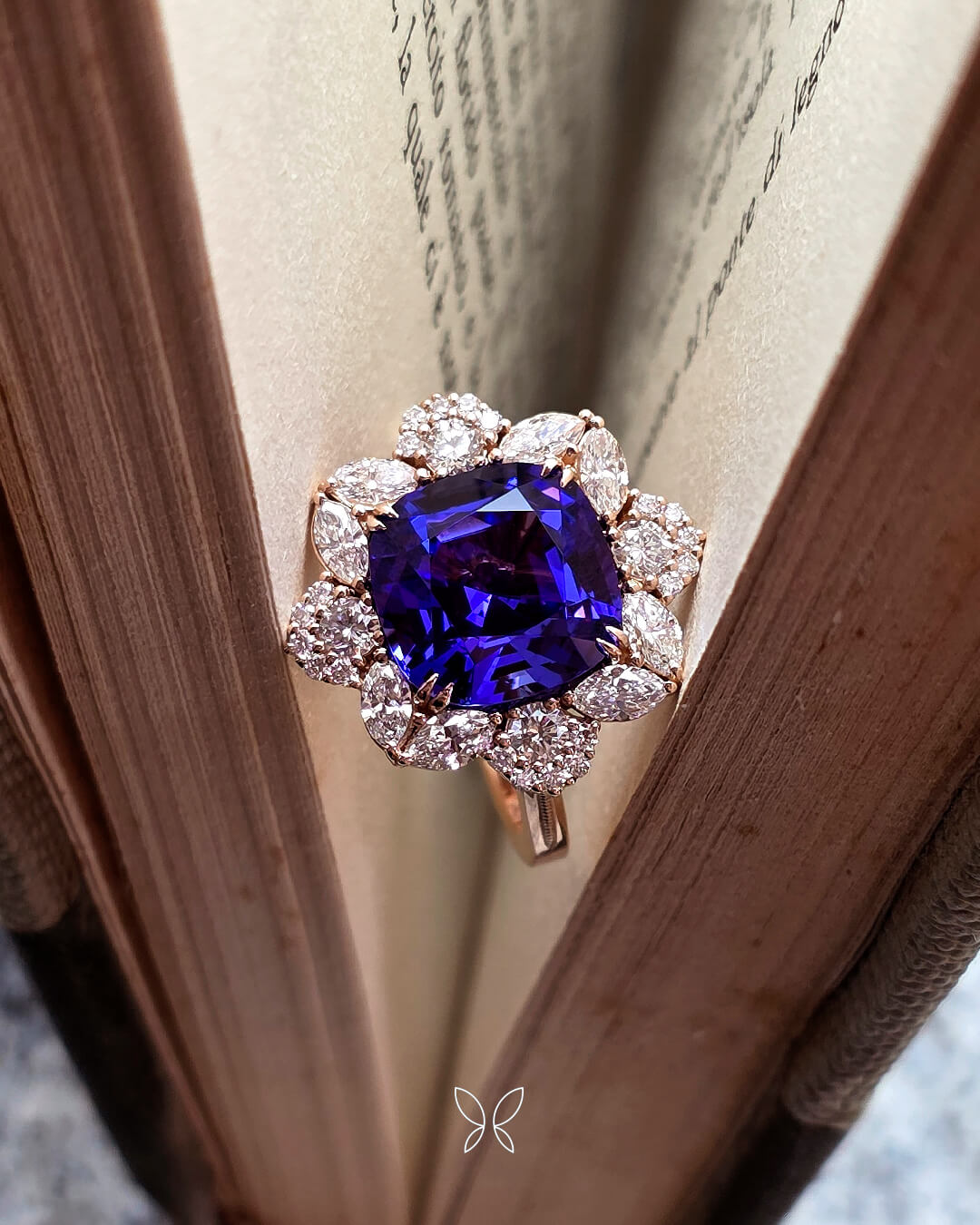
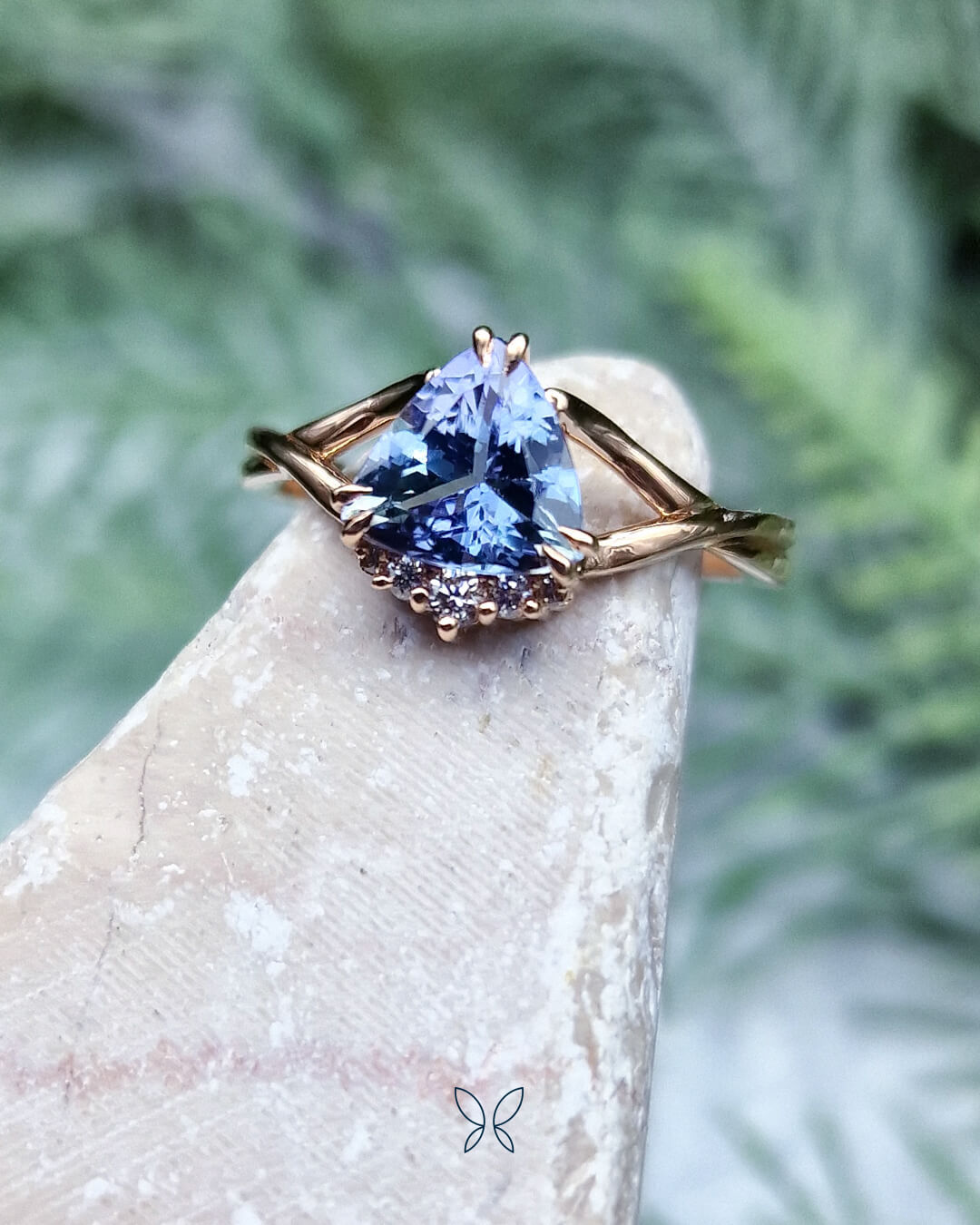
Its beauty lies in its color: shades oscillating between sapphire blue and amethyst violet, with light that seems to shift at every angle. Intense, hypnotic, impossible to ignore — like the vast landscapes of Africa.
Tanzanite is rare in two ways: geologically, because it is found only in a tiny area of the Merelani Hills; and physically, because even there production is limited and extraction complex, with mines reaching depths of up to 1,400 meters. This makes Tanzanite one of the most precious Gems of our time: young, yes, but already legendary.
History
“The most beautiful gemstone discovered in 2000 years.” — Tiffany & Co., 1968
With this phrase, Tiffany introduced Tanzanite to the world, just a year after Maasai herders found the first bluish-violet crystals at the foot of Kilimanjaro.
Legend has it the stones were once brown, until fire transformed them into luminous blue-violet gems.
In no time, Tanzanite became a symbol of modernity and transformation: a young, rare Gem deeply tied to its singular homeland — Tanzania.
Technical characteristics
Tanzanite has a hardness between 6 and 6.5 on the Mohs scale. Softer than Corundum or Diamond, it requires care in daily wear.
Its magic lies in pleochroism: the ability to display different colors depending on the angle of observation (blue, violet, sometimes green).
Most Tanzanites are heat-treated to enhance their blue-violet color, but rare untreated stones exist, with more complex, irregular hues.