Origin
Beryl forms slowly, under precise geological conditions, often in pegmatites or metamorphic rocks, where beryllium-rich fluids meet color-giving elements such as chromium, vanadium, iron, or manganese.
The most prized Aquamarines come from Brazil, Madagascar, Nigeria, Zambia, and Mozambique, with Brazilian examples renowned for their intense blue. The most iconic Emeralds come from Colombia, Brazil, and Zambia: the legendary Muzo mine in Colombia produces stones of pure, saturated green, often with the typical jardin inclusions.
Each origin leaves its mark: a cooler or warmer green, a velvetier or more crystalline blue. Knowing the provenance of a Beryl means reading a piece of its story.
History
“Nihil viridius smaragdo.” (Nothing is greener than the Emerald.) – Pliny the Elder, Naturalis Historia
The Emerald was sacred to the Pharaohs, adored by Cleopatra, and venerated by the Inca and Aztecs. A symbol of rebirth, love, and wisdom, it was believed to offer protection and power. In Ancient Rome, it was dedicated to Venus and thought to soothe both eyes and soul.
Aquamarine, on the other hand, was Neptune’s gem for the Romans: a talisman for sailors, carried as an inner compass and promise of safe voyages. Over time it came to symbolize tranquility, courage, and clarity of thought, enjoying particular popularity in the Art Deco jewelry of the 1920s and ’30s.
The Emerald was sacred to the Pharaohs, adored by Cleopatra, and venerated by the Inca and Aztecs. A symbol of rebirth, love, and wisdom, it was believed to offer protection and power. In Ancient Rome, it was dedicated to Venus and thought to soothe both eyes and soul.
Aquamarine, on the other hand, was Neptune’s gem for the Romans: a talisman for sailors, carried as an inner compass and promise of safe voyages. Over time it came to symbolize tranquility, courage, and clarity of thought, enjoying particular popularity in the Art Deco jewelry of the 1920s and ’30s.
Technical characteristics
Beryl has a hardness of 7.5–8 on the Mohs scale: durable, resistant, and suitable for daily wear, though it requires care against strong impacts.
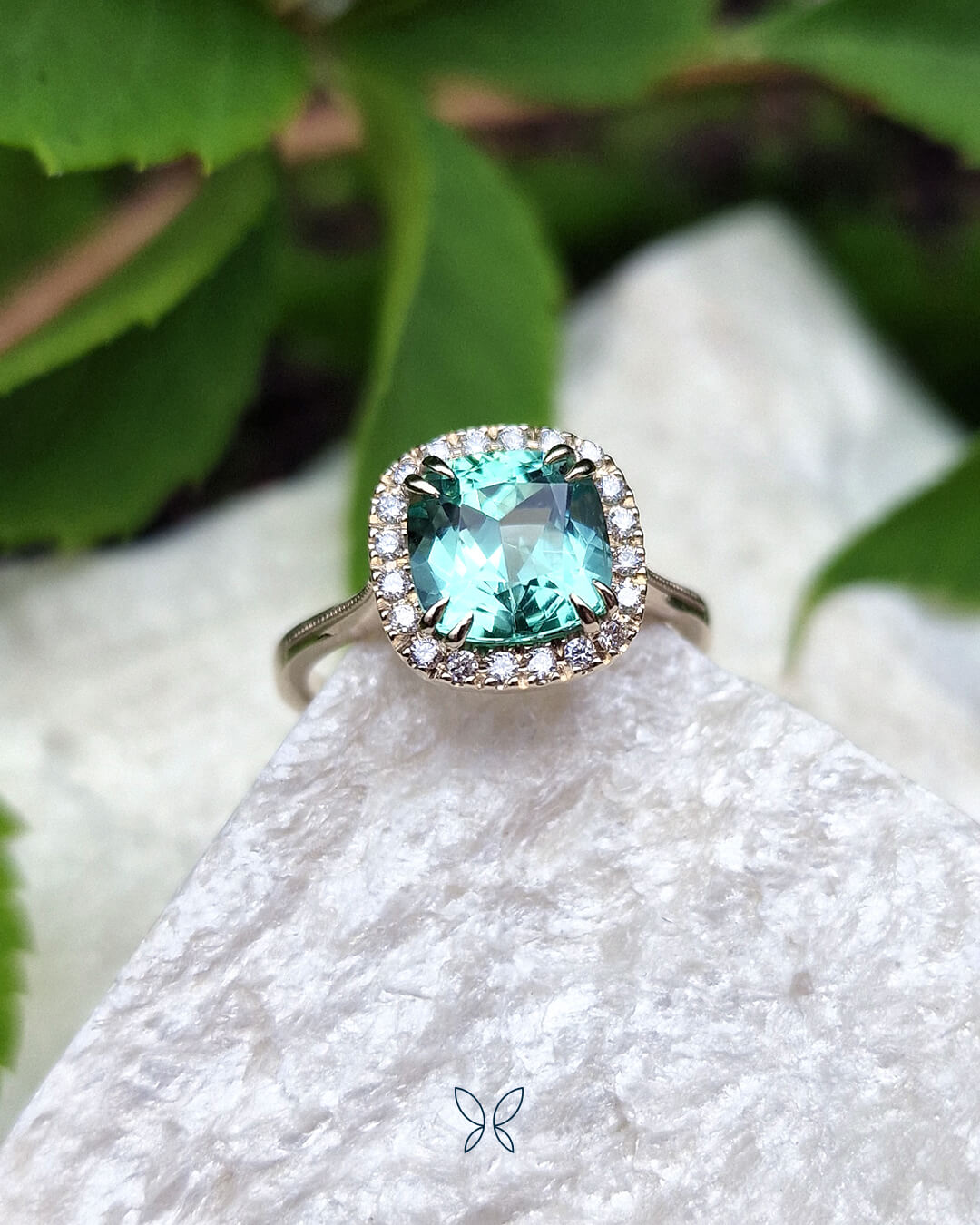
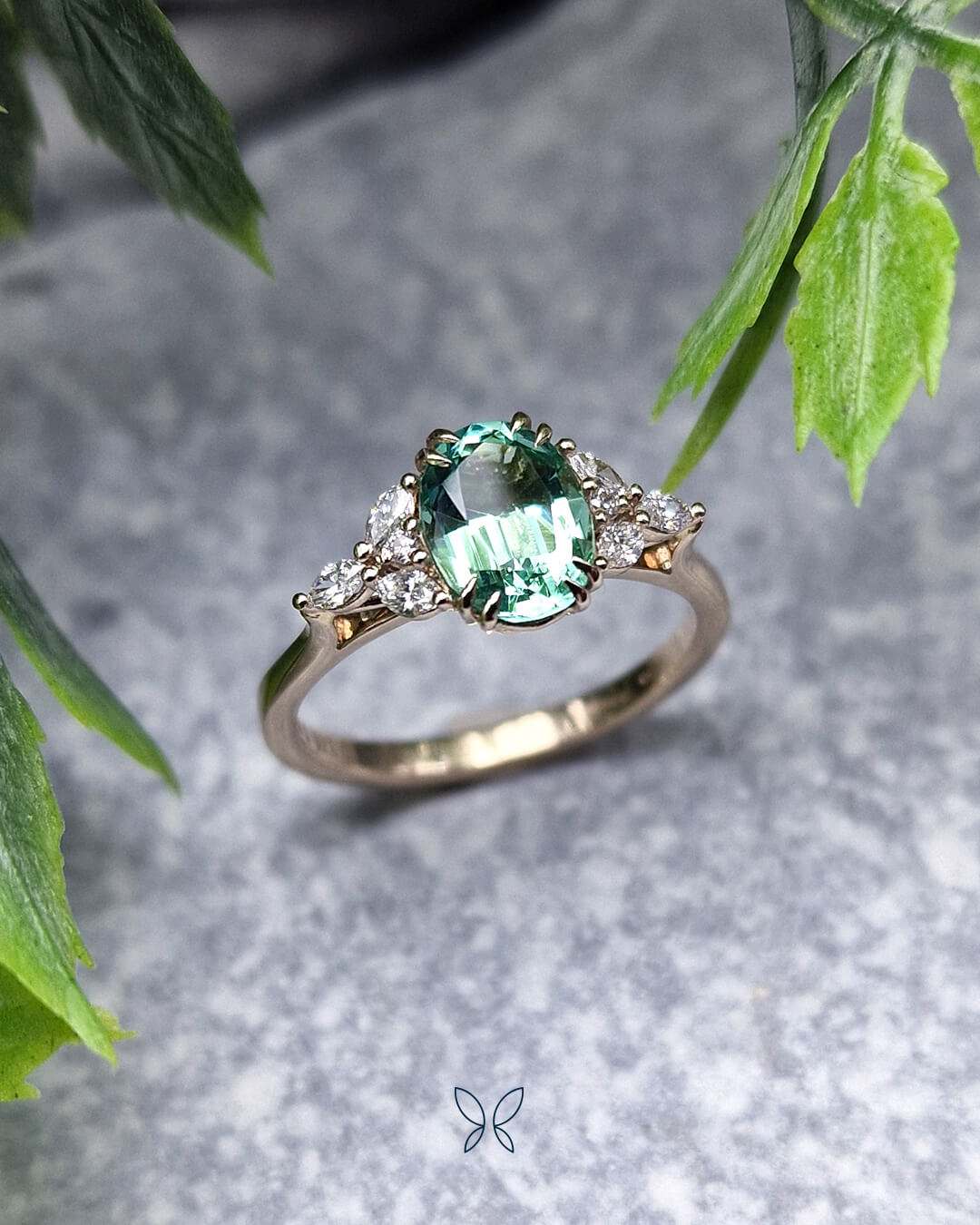
- Emerald: Its green color comes from chromium (and sometimes vanadium). The characteristic jardin inclusions are not flaws, but part of its natural charm.
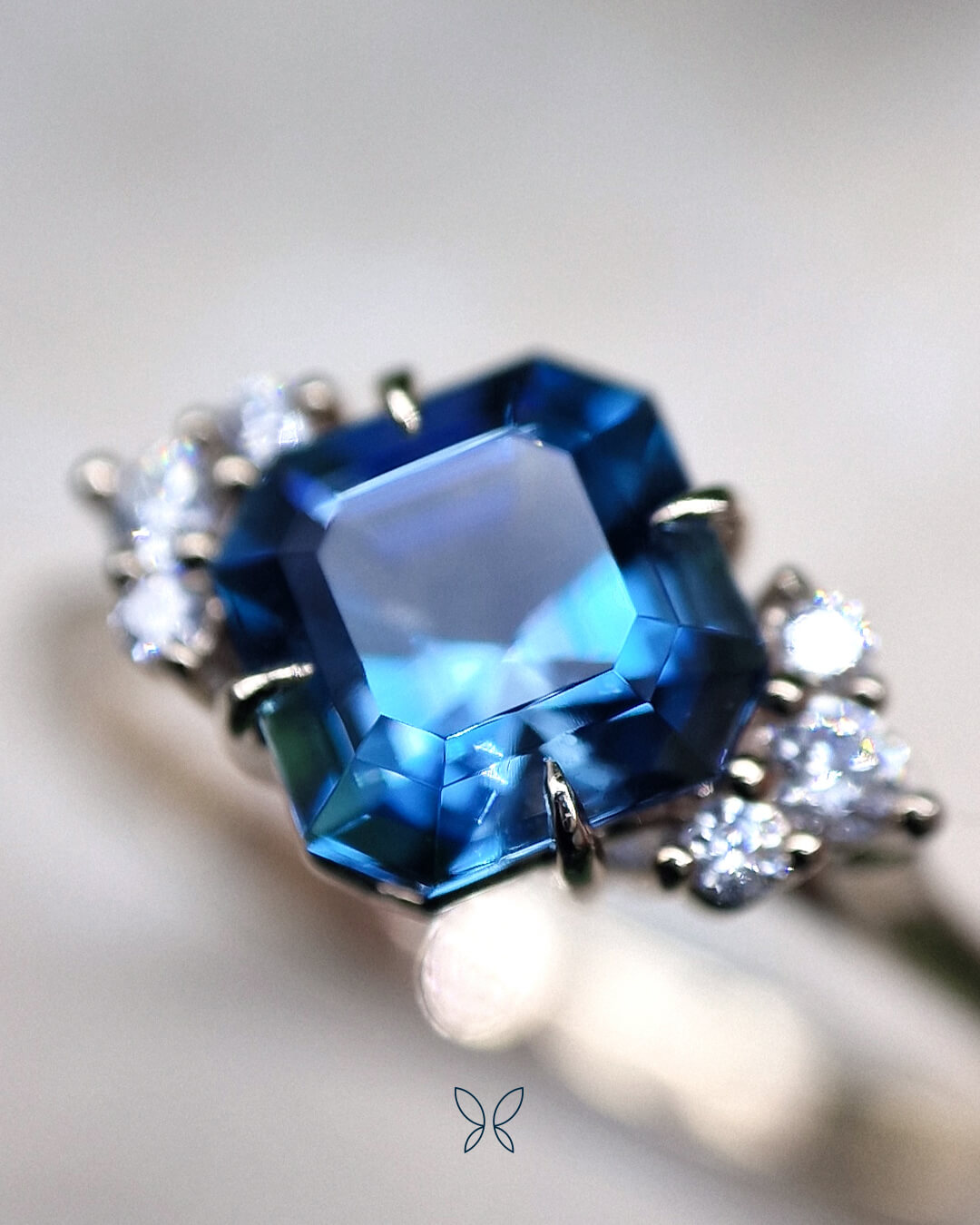
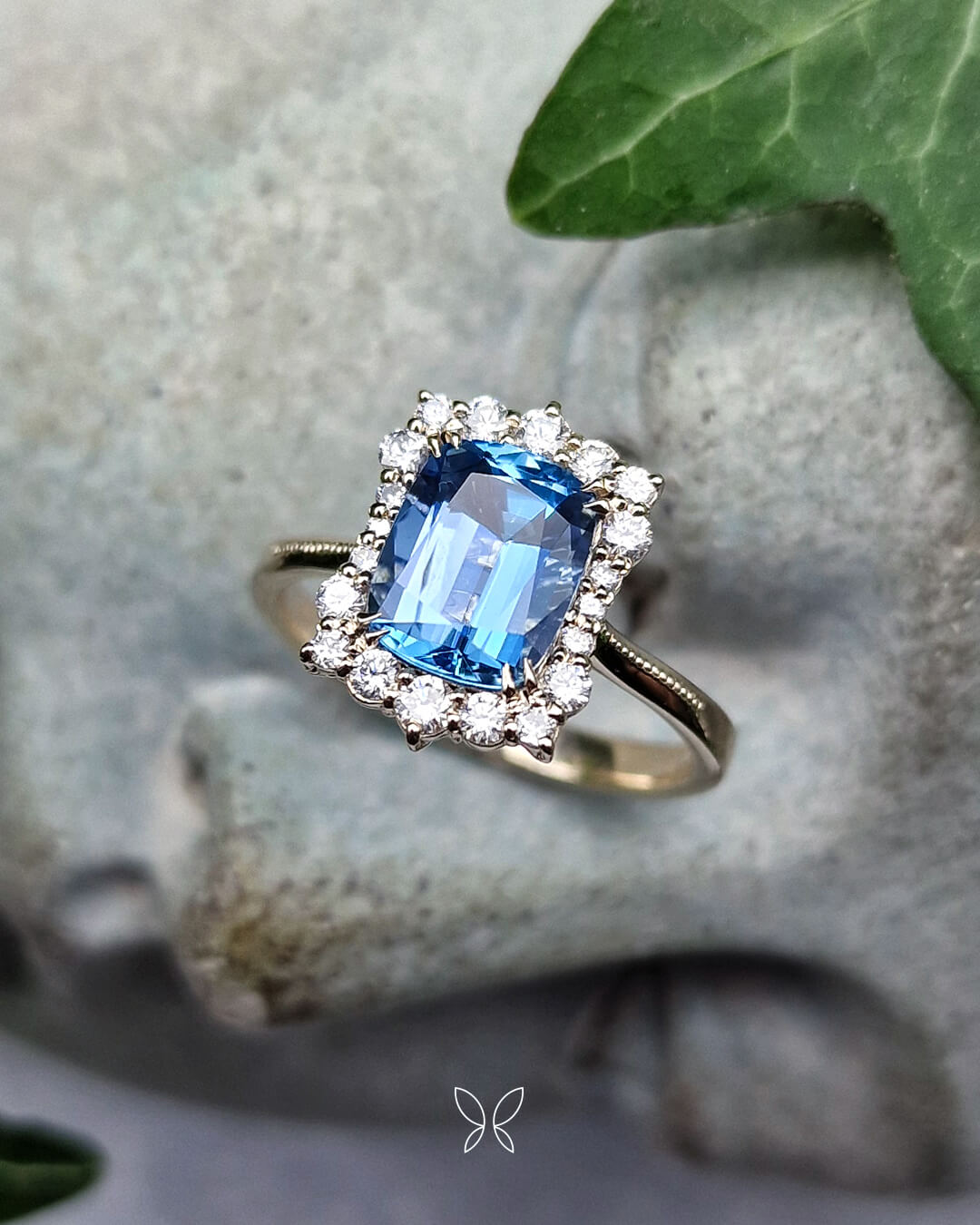
- Aquamarine: Sea-like hues — from pale blue to greenish-blue, due to iron. Bright, clear, perfect for those with a tropical soul.
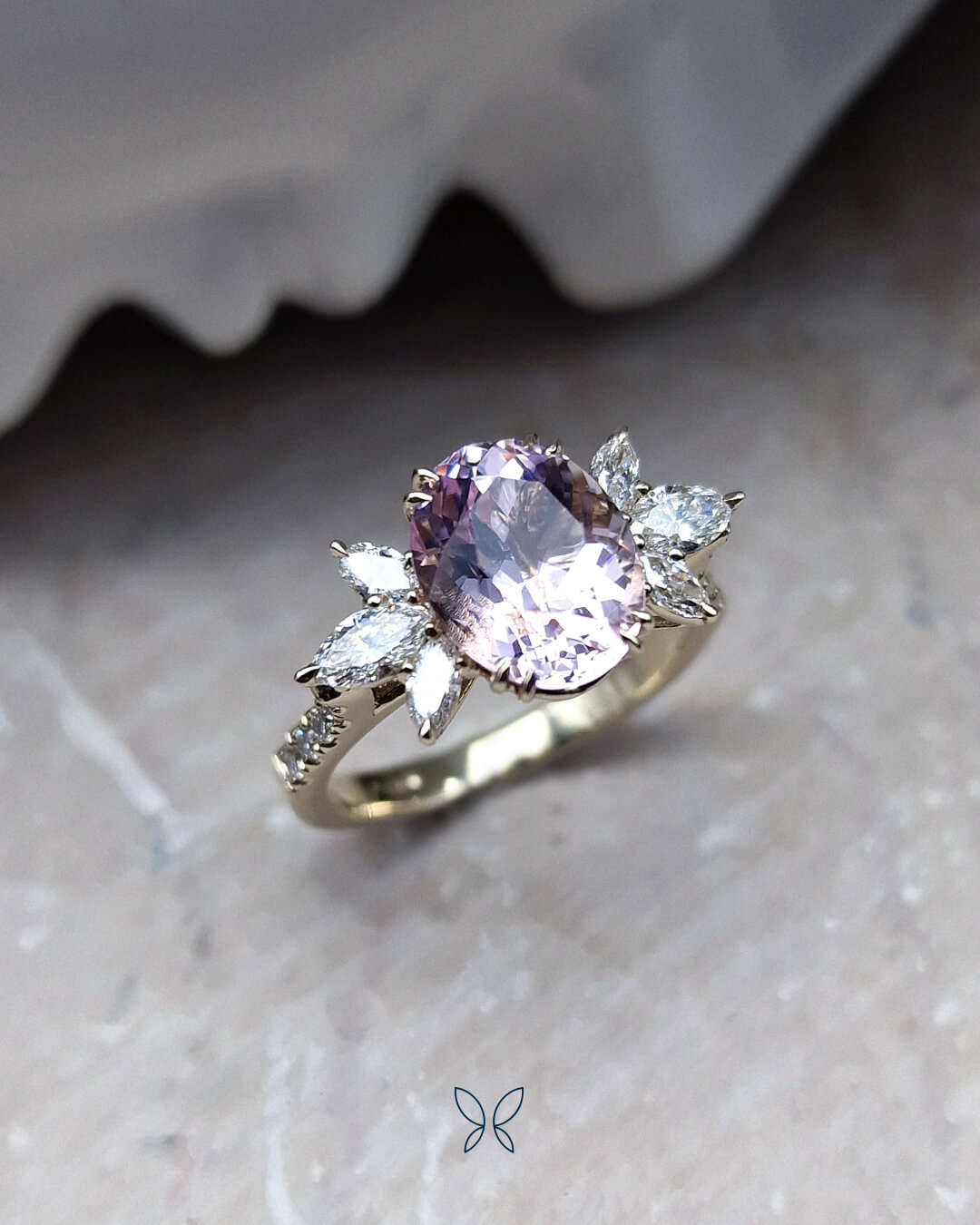
- Morganite: Gentle pink shades thanks to manganese, often with fewer inclusions than Emerald, offering more brilliance.
- Heliodor (Golden Beryl): Warm golden yellow, colored by iron in a different state than Aquamarine. Rare, authentic, luminous.
Variety
Beryl is a family with many faces:
- Muzo Emerald (Colombia): Intense green with bluish tones, exceptional saturation, rare three-phase inclusions.
- Santa Maria Aquamarine: Vibrant, saturated blue, extremely rare, found in Brazil and Mozambique.
- Color-change Aquamarine: Exceptionally rare, can shift hues depending on light.
- Morganite: Peach or blush pink, delicate and elegant.
- Heliodor: Radiant golden yellow.
- Bixbite: Fiery red, extremely rare and valuable.
- Goshenite: Colorless, sometimes used as a diamond substitute.